The life of Pablo Neruda
Born in Parral in 1904, he died in Santiago in 1973. In between: a boy from the south who became a consul in Asia, a witness of the Spanish Civil War, a senator, a fugitive, an exile and a Nobel laureate. Here is his life as he lived it, from port to port.
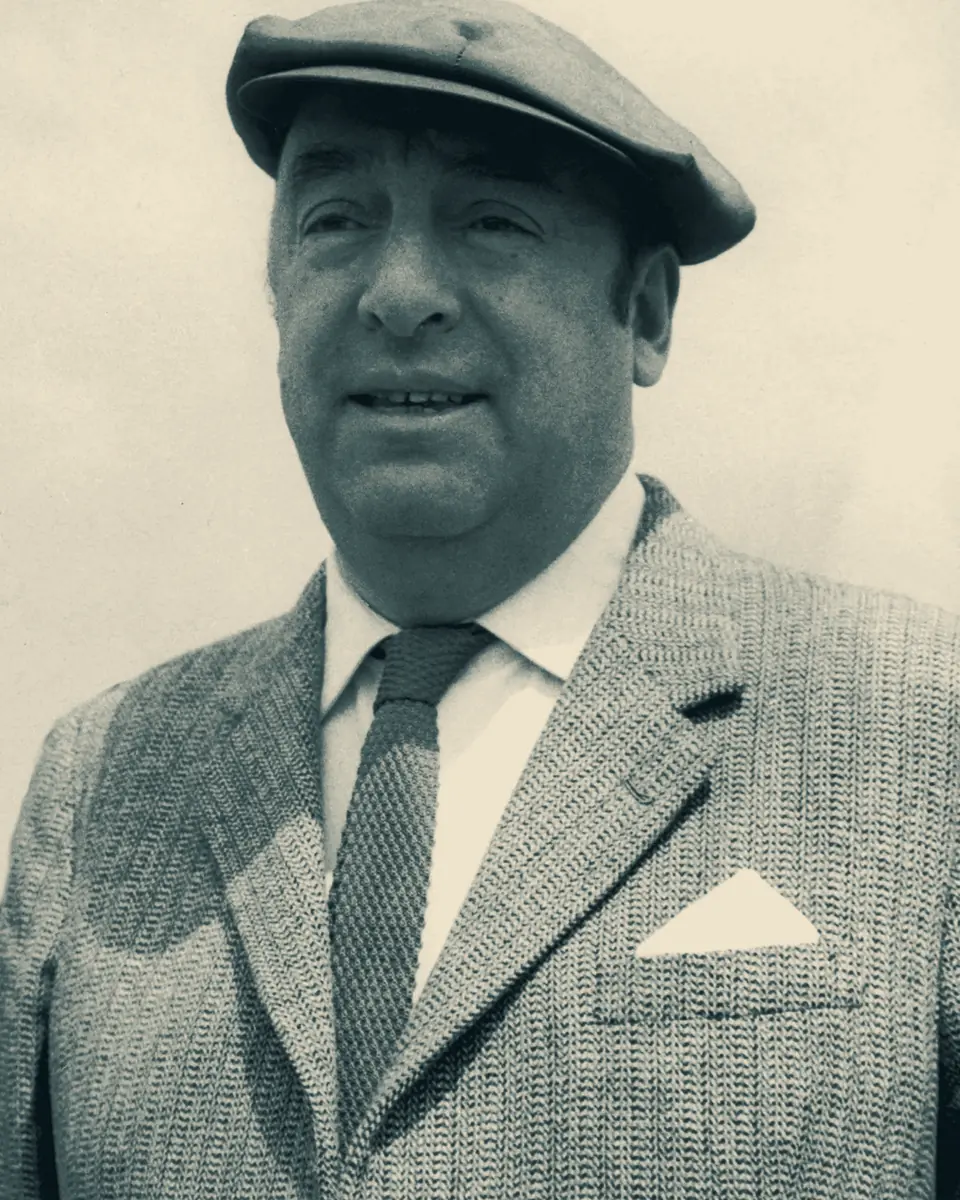
1904–1927Childhood and first books
-
1904
Neftalí Reyes is born
Parral, ChileHe is born on 12 July 1904 as Ricardo Eliécer Neftalí Reyes Basoalto. His mother, the schoolteacher Rosa Neftalí Basoalto, dies of tuberculosis a few weeks later. He will have no memory of her: he will look for her in photographs and poems all his life.
-
1906–1920
Rain, forest and the ballast train
Temuco, ChileHis father, José del Carmen Reyes, who drove a ballast train, takes him south and marries Trinidad Candia, whom the boy will call his «mamadre», a word he made up from «mother» and «stepmother». The rain of the Araucanía, the timber and the insects of the forest stay with him for ever. In 1920 he meets Gabriela Mistral, head of the girls’ school, who lends him Russian novels. That same year he signs a poem as Pablo Neruda for the first time, so his father will not find out that he writes.
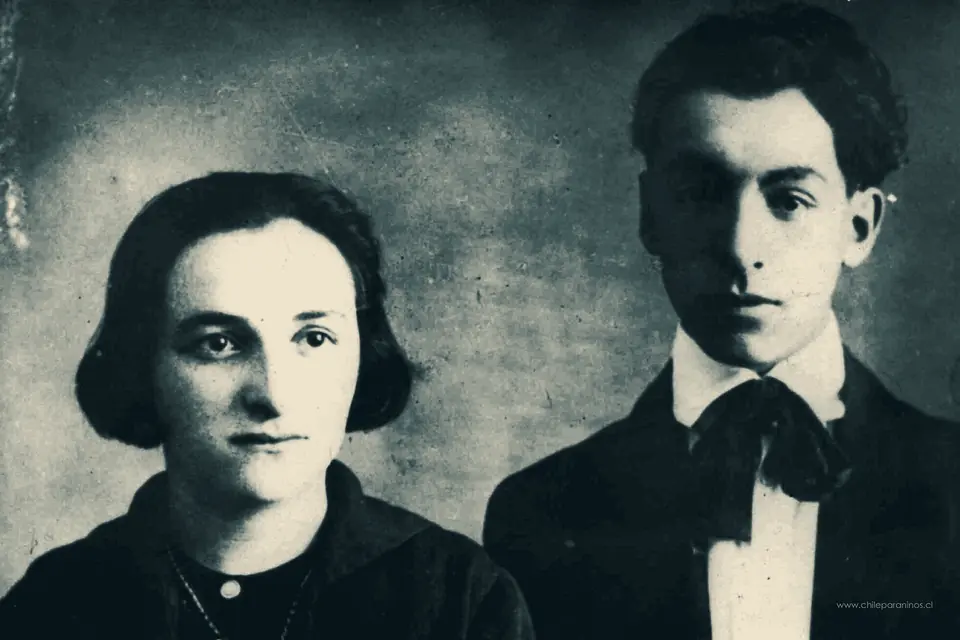
Neftalí Reyes, before he took his pen name, with his sister Laura, around 1916.Photo: Unknown author · Public domain · colour modified -
1921–1927
A student in black in the capital
Santiago, ChileHe comes to study to be a French teacher at the Instituto Pedagógico. He lives in boarding houses, goes hungry and writes non-stop. In 1923 he sells his furniture and a watch his father gave him to pay for printing Crepusculario. The next year he publishes Twenty Love Poems and a Song of Despair, the book that will make him famous.
1927–1945Travels and diplomacy
-
1927–1928
Consul on the other side of the world
Rangoon, Burma (now Myanmar)At 23 he accepts a consulate in Rangoon, a post with no fixed salary and almost no work. Loneliness, heat and a language he does not understand turn him inward: this is where Residence on Earth begins, the darkest book he ever wrote.
-
1928–1929
A house by the sea at Wellawatta
Colombo, Ceylon (now Sri Lanka)He stays on as consul in Ceylon. He lives with a mongoose called Kiria and writes poems for Residence on Earth. Years later he tells of those days in his memoirs, with a frankness that is still uncomfortable to read.
-
1930–1931
Marriage in Java
Batavia, Java (now Jakarta, Indonesia)Consul in Batavia and in Singapore at the same time. On 6 December 1930 he marries María Antonieta Hagenaar, a Dutch woman living in Java. He finishes the poems of the first volume of Residence on Earth.
-
1931
The double consulate
SingaporeHe also runs the Singapore consulate. In 1932 he sails back to Chile with the manuscript of Residence under his arm.
-
1933–1934
Lorca
Buenos Aires, ArgentinaConsul in Buenos Aires. In October 1933 he meets Federico García Lorca, who is opening Blood Wedding in the city. They become friends at once and give a speech together, in two voices, in homage to Rubén Darío.
-
1934–1937
The House of Flowers
Madrid, SpainAfter a spell in Barcelona he becomes consul in Madrid and lives in the Casa de las Flores, in the Argüelles district. In 1934 his daughter Malva Marina is born with hydrocephalus. He publishes the complete Residence on Earth (1935) and edits the magazine Caballo verde para la poesía. He meets the Argentine painter Delia del Carril. The Civil War and the murder of Lorca, in 1936, change his voice: out of that comes Spain in Our Hearts.
-
1937–1939
The Winnipeg
Paris, FranceAppointed special consul for Spanish immigration, he organises the voyage of the Winnipeg, a converted cargo ship. It sails from France on 4 August 1939 with more than two thousand Republican refugees and reaches Valparaíso in early September. Years later he wrote that critics could erase all his poetry, but no one would erase that poem.
-
1940–1943
Consul general and a whole continent
Mexico City, MexicoHe is Chile’s consul general in Mexico. He spends time with the muralists, argues, travels and starts to imagine a poem the size of America. In 1943 he marries Delia del Carril and sets off home to Chile, stopping across the continent.
-
1943
Climbing to the city of stone
Machu Picchu, PeruIn October 1943, on his way back to Chile, he climbs to Machu Picchu. The visit gives him the heart of Canto General: the twelve poems of The Heights of Macchu Picchu, written in 1945, which he spelled that way, with a double c.
-
1938–1945
A small stone house by the sea
Isla Negra, ChileIn 1938 he buys a small stone house on the coast from Eladio Sobrino, a Spanish sailor, in a place he himself will name Isla Negra, though it is not an island. Between 1943 and 1945 he enlarges it as if it were a ship.
1945–1952Senate and exile
-
1945
Senator for the saltpetre pampa
Antofagasta, ChileIn March 1945 he is elected senator for Tarapacá and Antofagasta, with the votes of the saltpetre and copper workers. That year he wins the National Prize for Literature and joins the Communist Party.
-
1948–1949
In hiding, on horseback
Lilpela Pass, The AndesOn 6 January 1948 he denounces President González Videla in the Senate («I accuse»). His parliamentary immunity is lifted and an arrest warrant is issued. He spends more than a year hidden in friends’ houses, finishing Canto General. In February 1949 he crosses the Andes on horseback by the Lilpela Pass into Argentina.
-
1949–1952
Exile and Matilde
Capri, ItalyHe reappears in Paris in April 1949, at a peace congress. He travels across Europe and Asia. In 1950 Canto General comes out in Mexico. In 1952 he lives in Capri with Matilde Urrutia and publishes The Captain’s Verses in Naples without his name: 44 copies. Those months later inspired Antonio Skármeta’s novel and the film Il Postino.
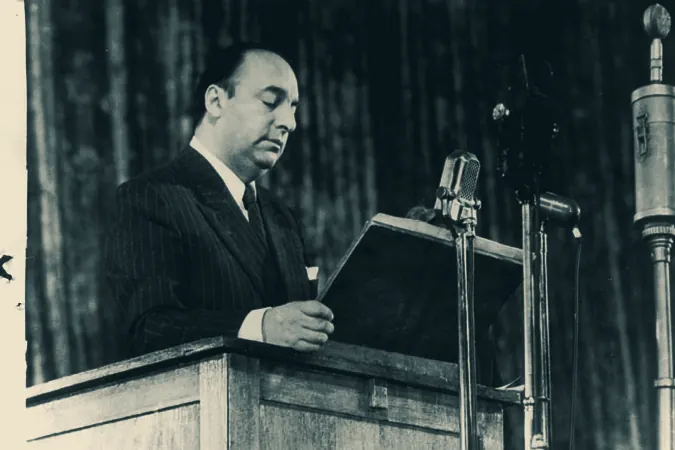
In exile, reading in the Soviet Union, August 1950.Photo: Archivo Histórico del Ministerio de Relaciones Exteriores de Chile · CC BY 2.0 cl · colour modified
1952–1973Return to Chile and the Nobel Prize
-
1952–1958
La Chascona
Santiago, ChileHe returns to Chile in August 1952. In 1953 he starts building La Chascona, at the foot of San Cristóbal hill, for Matilde. He writes the Elemental Odes (1954) and that same year gives his library and his seashell collection to the University of Chile. In 1955 he separates from Delia del Carril.
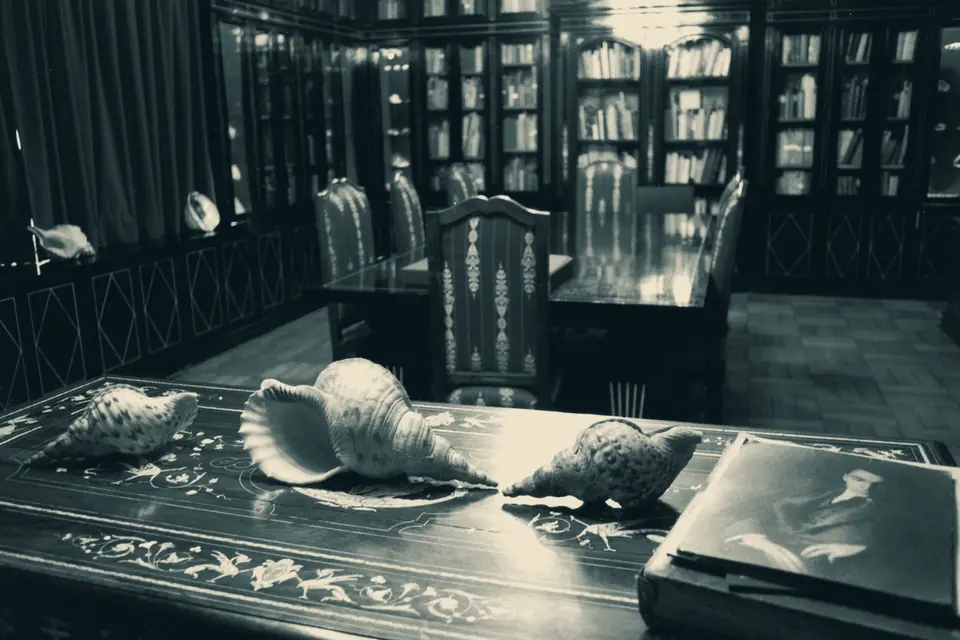
Some of the seashells Neruda gave to the University of Chile in 1954.Photo: sisib uchile · CC BY 2.0 · colour modified -
1959–1961
La Sebastiana
Valparaíso, ChileHe publishes One Hundred Love Sonnets (1959), dedicated to Matilde. With some friends he buys an unfinished house on Bellavista hill in Valparaíso and opens it on 18 September 1961: La Sebastiana.
-
1964–1970
Isla Negra: A Notebook
Isla Negra, ChileFor his sixtieth birthday he publishes Memorial de Isla Negra, an autobiography in verse in five volumes. In 1966 he marries Matilde. In 1969 the Communist Party names him its presidential candidate; in January 1970 he withdraws to back Salvador Allende.
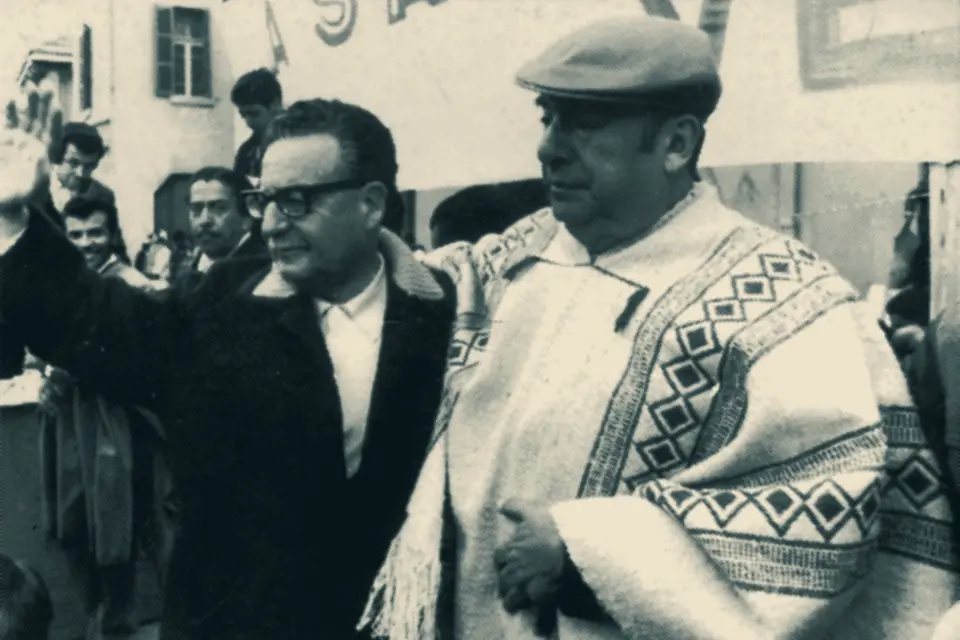
With Salvador Allende, for whom he withdrew from the presidential race in 1970.Photo: Biblioteca del Congreso Nacional de Chile · CC BY 3.0 cl · colour modified -
1971
The Nobel Prize
Stockholm, SwedenWhile he is Chile’s ambassador to France, the Swedish Academy awards him the Nobel Prize in Literature, announced on 21 October 1971. He receives it in Stockholm on 10 December and three days later gives his lecture, «Towards the Splendid City».
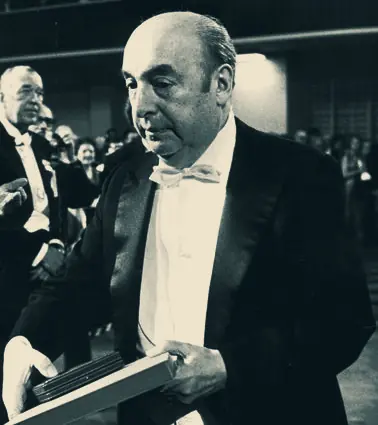
Stockholm, 10 December 1971: the Nobel ceremony.Photo: Svenska Akademien Archives · CC BY 4.0 · colour modified -
1973
Twelve days after the coup
Santiago, ChileHe comes home ill at the end of 1972. On 11 September 1973 the military coup overthrows Allende. Neruda dies on 23 September at the Clínica Santa María. His funeral, on the 25th, becomes the first public protest against the dictatorship. The cause of his death is still under judicial investigation.
1992Epilogue at Isla Negra
-
1992
Facing the sea he knew
Isla Negra, ChileIn December 1992 his remains and Matilde’s are moved to Isla Negra, as he had asked in Canto General. They are buried on the terrace of the house, looking out at the Pacific.
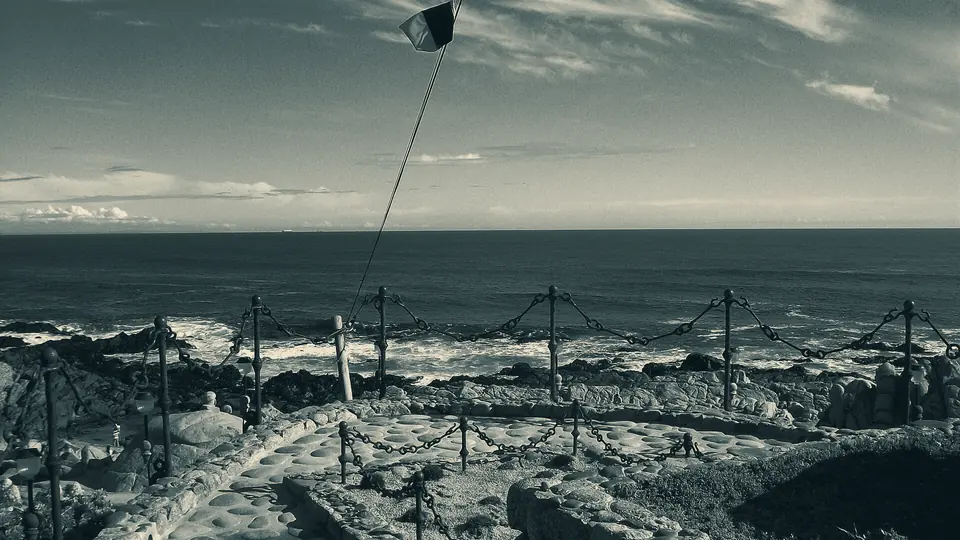
The grave of Neruda and Matilde, looking out to sea at Isla Negra.Photo: Infantecatalina · CC BY-SA 3.0 · colour modified, same licence
A contested figure
Neruda is Chile’s most read poet and also one of its most debated. In recent years his treatment of his daughter Malva Marina, whom he stopped seeing and supporting, has been judged harshly, as has a passage in his memoirs in which he recounts forcing himself on a woman in Ceylon. In 2018 a proposal to name Santiago’s airport after him drew protests for those reasons. Reading him today includes knowing that.
And his death?
The cause of his death is still under judicial investigation. We set out what is known, with dates and sources, in How did Pablo Neruda die?
Frequently asked questions
Where was Pablo Neruda born?
In Parral, in what is now the Maule region of Chile, on 12 July 1904.
Who did Neruda marry?
Three women: María Antonieta Hagenaar (1930), Delia del Carril (1943) and Matilde Urrutia (1966).
Did Neruda have children?
One daughter, Malva Marina, born in Madrid in 1934 with hydrocephalus. She died in the Netherlands in 1943, aged eight.
Where was he a consul?
In Burma, Ceylon, Java and Singapore, Argentina, Spain and Mexico. In 1970-1972 he was ambassador to France.
Why did Neruda have to flee Chile?
In 1948 he denounced President Gabriel González Videla in the Senate. His immunity was lifted, an arrest warrant was issued and he lived in hiding for more than a year before crossing the Andes on horseback in 1949.