Poem by Pablo Neruda · Canto General, «The Great Ocean» (1950)
The Statue Builders (Rapa Nui)
In Spanish: «Los constructores de estatuas (Rapa Nui)»
The nameless sculptor of the moai speaks: the statues are his face and his people’s.
Yo soy el constructor de las estatuas. No tengo
nombre.
I am the builder of the statues. I have no
name.
The poem continues in the book. We quote only its opening: Neruda’s work is under copyright.
What it is about
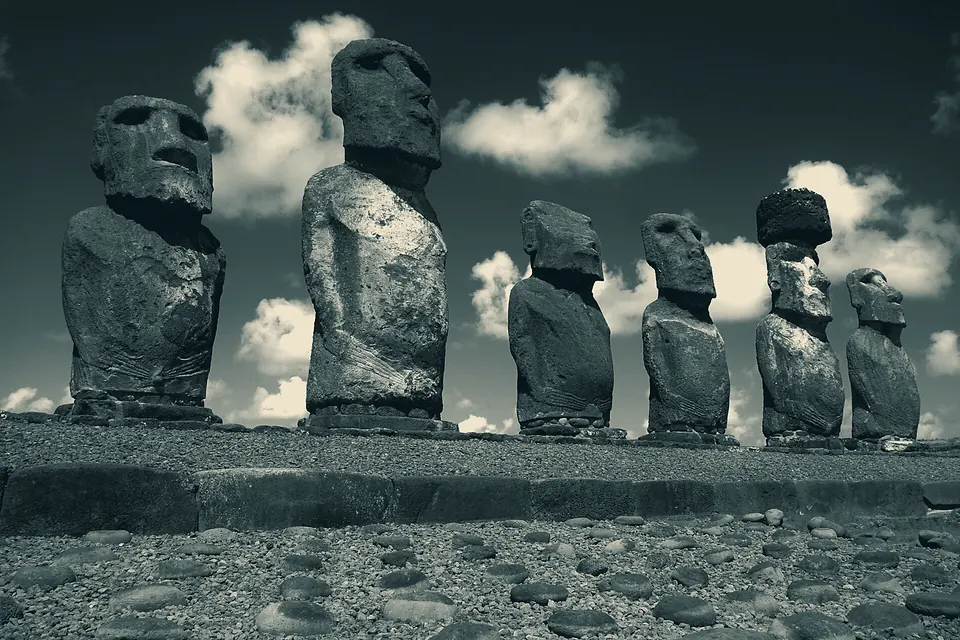
In this poem one of those who carved the moai speaks. He has no name and no face: his face stayed in the stone. The statues do not mean anything; they only want to be born and last in silence. They are what their builders were, a hive of stone carved by many hands.
How to read it
It is the same gesture as «Rise Up and Be Born with Me, Brother»: giving a voice to the workers history forgot. Read it with «Rapa Nui».
Where to read it in full
It is online in full, in Spanish, in the anthology of the Pablo Neruda Portal of the University of Chile, which publishes his poems for study.
Read «Los constructores de estatuas (Rapa Nui)» in Spanish (opens in a new tab)
It is in Canto General (1950). In English, look for an authorised translation —ideally a bilingual edition— in bookshops or at a public library. Guide to Canto General. All the poems of the book in the index.
Frequently asked questions
Which book is Neruda’s «The Statue Builders (Rapa Nui)» in?
In Canto General, in the section «The Great Ocean», published in 1950. In Spanish the poem is called «Los constructores de estatuas (Rapa Nui)».
How does «The Statue Builders (Rapa Nui)» begin?
In Spanish: «Yo soy el constructor de las estatuas. No tengo nombre.». Literally: «I am the builder of the statues. I have no name.».
Where can I read «The Statue Builders (Rapa Nui)» in full?
In Spanish, in the online anthology of the University of Chile’s Pablo Neruda Portal, which publishes it for study. In English, in an authorised translation of the book.