Poem by Pablo Neruda · Canto General, «The Great Ocean» (1950)
The Rain (Rapa Nui)
In Spanish: «La lluvia (Rapa Nui)»
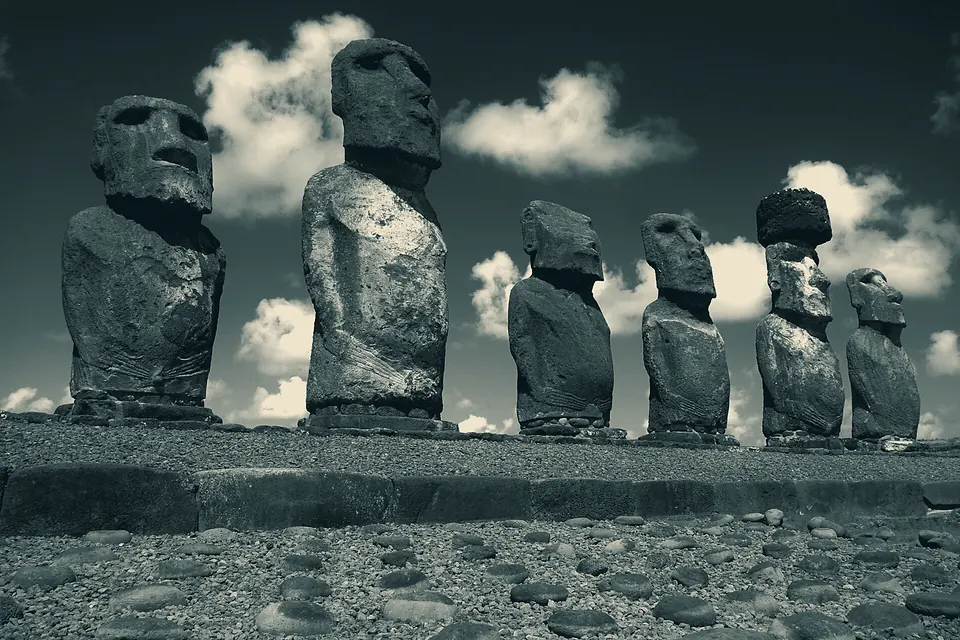
A love scene in the rain on Rapa Nui, among statues and volcanoes.
No, que la reina no reconozca
tu rostro, es más dulce
así, amor mío,
No, may the queen not recognise
your face, it is sweeter
this way, my love,
The poem continues in the book. We quote only its opening: Neruda’s work is under copyright.
What it is about
A love poem on an ancient island. Two lovers wait naked for the rain, far from the stone effigies, and the water that hardens the statues’ faces carries them towards the dark. He recognises himself as made of earth and rain, like her, and falls asleep with his hand on her breast.
How to read it
Names from the island appear: the Rano Raraku volcano, where the moai came from, and Manu Tara, the bird of the old birdman cult.
Where to read it in full
It is online in full, in Spanish, in the anthology of the Pablo Neruda Portal of the University of Chile, which publishes his poems for study.
It is in Canto General (1950). In English, look for an authorised translation —ideally a bilingual edition— in bookshops or at a public library. Guide to Canto General. All the poems of the book in the index.
Also in: poems about the sea
Frequently asked questions
Which book is Neruda’s «The Rain (Rapa Nui)» in?
In Canto General, in the section «The Great Ocean», published in 1950. In Spanish the poem is called «La lluvia (Rapa Nui)».
How does «The Rain (Rapa Nui)» begin?
In Spanish: «No, que la reina no reconozca tu rostro, es más dulce así, amor mío,». Literally: «No, may the queen not recognise your face, it is sweeter this way, my love,».
Where can I read «The Rain (Rapa Nui)» in full?
In Spanish, in the online anthology of the University of Chile’s Pablo Neruda Portal, which publishes it for study. In English, in an authorised translation of the book.