Poem by Pablo Neruda · Canto General, «I Am» (1950)
Testament (II)
In Spanish: «Testamento (II)»
Neruda leaves his old books to the young poets of the Americas, with his masters of always.
Dejo mis viejos libros, recogidos
en rincones del mundo,
I leave my old books, gathered
in corners of the world,
The poem continues in the book. We quote only its opening: Neruda’s work is under copyright.
What it is about
In this second testament the poet leaves his library, books gathered in every corner of the world, to the new poets of the Americas. He asks them to find in his masters —Góngora, Garcilaso, Quevedo, Lautréamont, Mayakovsky— rigour and a guiding star.
How to read it
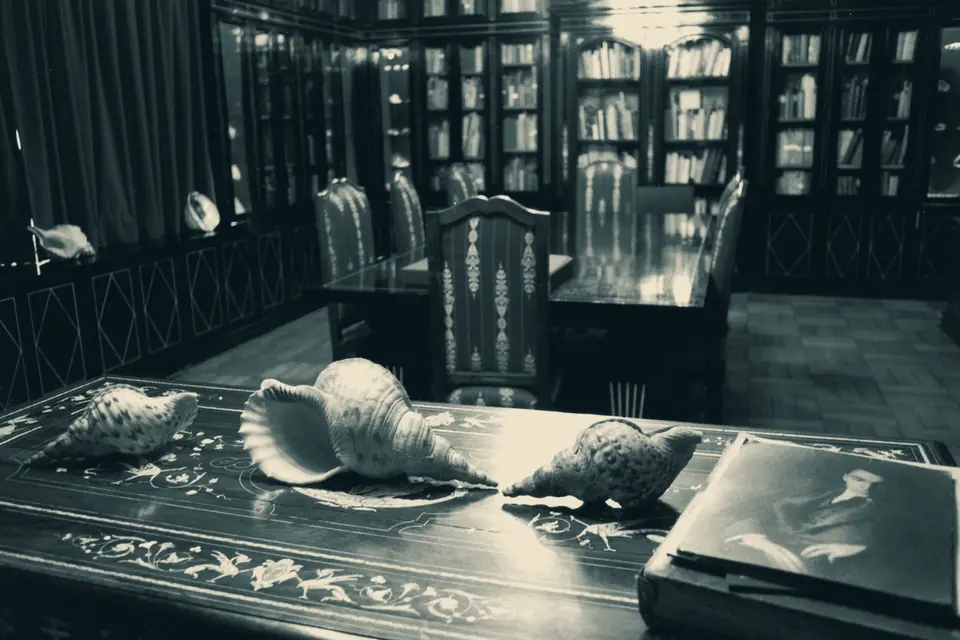
It is a list of his favourite reading. And it was not just a poem: in 1954 Neruda gave his library and his seashell collection to the University of Chile.
Where to read it in full
It is online in full, in Spanish, in the anthology of the Pablo Neruda Portal of the University of Chile, which publishes his poems for study.
It is in Canto General (1950). In English, look for an authorised translation —ideally a bilingual edition— in bookshops or at a public library. Guide to Canto General. All the poems of the book in the index.
Frequently asked questions
Which book is Neruda’s «Testament (II)» in?
In Canto General, in the section «I Am», published in 1950. In Spanish the poem is called «Testamento (II)».
How does «Testament (II)» begin?
In Spanish: «Dejo mis viejos libros, recogidos en rincones del mundo,». Literally: «I leave my old books, gathered in corners of the world,».
Where can I read «Testament (II)» in full?
In Spanish, in the online anthology of the University of Chile’s Pablo Neruda Portal, which publishes it for study. In English, in an authorised translation of the book.