Poem by Pablo Neruda · Canto General, «The Great Ocean» (1950)
Rapa Nui
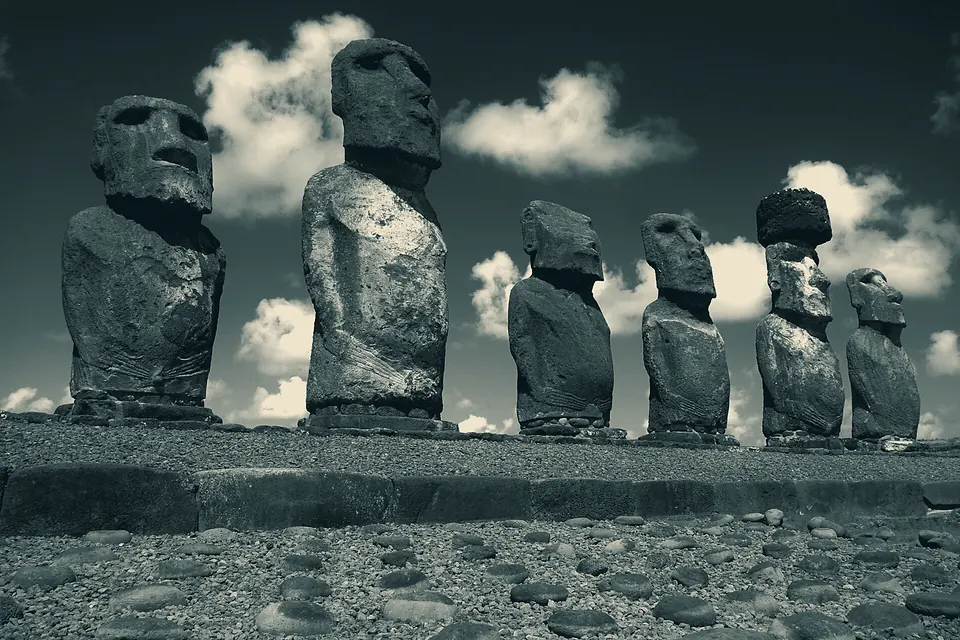
Easter Island and its statues: the stone faces watching the ocean.
Tepito-Te-Henúa, ombligo del mar grande,
taller del mar, extinguida diadema.
Tepito-Te-Henúa, navel of the great sea,
workshop of the sea, extinguished crown.
The poem continues in the book. We quote only its opening: Neruda’s work is under copyright.
What it is about
Neruda sings to Rapa Nui, the island its inhabitants called «the navel of the world». The moai are stone faces risen from the craters, sentinels of the ocean. The poem ends in mystery: only time and sand know their words.
How to read it
It is in «The Great Ocean», the section of Canto General devoted to the Pacific.
Years later Neruda travelled to the island and devoted a whole book to it, The Separate Rose (1972).
Where to read it in full
It is online in full, in Spanish, in the anthology of the Pablo Neruda Portal of the University of Chile, which publishes his poems for study.
It is in Canto General (1950). In English, look for an authorised translation —ideally a bilingual edition— in bookshops or at a public library. Guide to Canto General. All the poems of the book in the index.
Also in: poems about the sea
Frequently asked questions
Which book is Neruda’s «Rapa Nui» in?
In Canto General, in the section «The Great Ocean», published in 1950. In Spanish the poem is called «Rapa Nui».
How does «Rapa Nui» begin?
In Spanish: «Tepito-Te-Henúa, ombligo del mar grande, taller del mar, extinguida diadema.». Literally: «Tepito-Te-Henúa, navel of the great sea, workshop of the sea, extinguished crown.».
Where can I read «Rapa Nui» in full?
In Spanish, in the online anthology of the University of Chile’s Pablo Neruda Portal, which publishes it for study. In English, in an authorised translation of the book.