Poem by Pablo Neruda · Elemental Odes (1954)
Ode to the Sea
In Spanish: «Oda al mar»
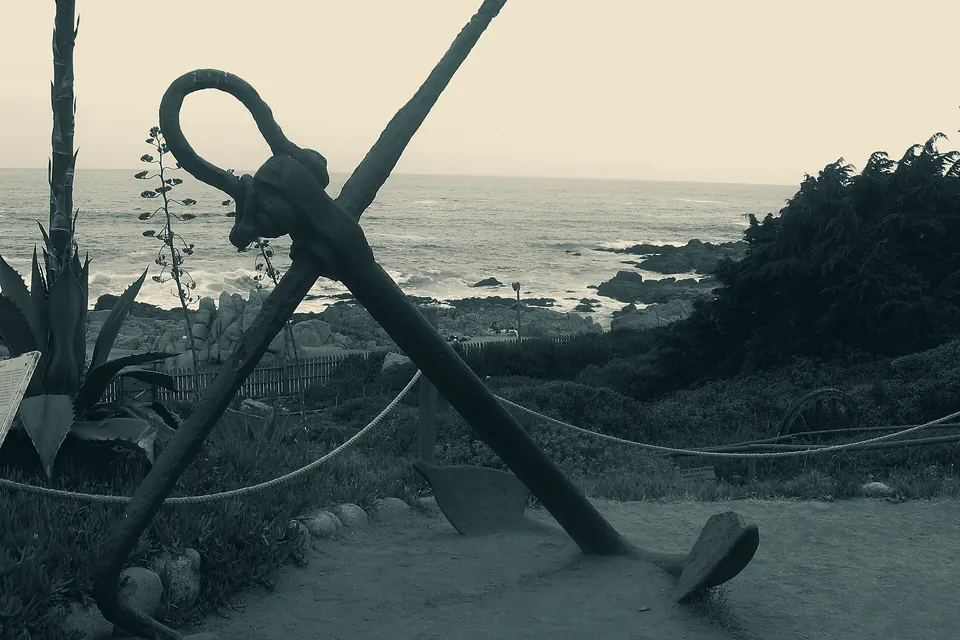
The sea at Isla Negra, which says yes and no and cannot keep still.
Aquí en la isla
el mar
y cuánto mar
se sale de sí mismo
a cada rato,
Here on the island
the sea
and so much sea
spills out of itself
all the time,
The poem continues in the book. We quote only its opening: Neruda’s work is under copyright.
What it is about
Neruda watches the sea from Isla Negra and describes it as a restless creature: it says yes, it says no, it beats against the stones without convincing them. Then he asks it to stop threatening and give every man, woman and child a big fish. It ends with people: bread and miracles are not brought by the sea, they are won by struggle.
How to read it
It starts as a landscape poem and ends as a poem about hunger and work. That turn, from the sea to people, is typical of the odes.
Where to read it in full
It is online in full, in Spanish, in the anthology of the Pablo Neruda Portal of the University of Chile, which publishes his poems for study.
It is in Elemental Odes (1954). In English, look for an authorised translation —ideally a bilingual edition— in bookshops or at a public library. Guide to Elemental Odes. All the poems of the book in the index.
Also in: odes · poems about nature · poems about the sea
Frequently asked questions
Which book is Neruda’s «Ode to the Sea» in?
In Elemental Odes, published in 1954. In Spanish the poem is called «Oda al mar».
How does «Ode to the Sea» begin?
In Spanish: «Aquí en la isla el mar y cuánto mar se sale de sí mismo a cada rato,». Literally: «Here on the island the sea and so much sea spills out of itself all the time,».
Where can I read «Ode to the Sea» in full?
In Spanish, in the online anthology of the University of Chile’s Pablo Neruda Portal, which publishes it for study. In English, in an authorised translation of the book.