Poem by Pablo Neruda · Canto General, «The Liberators» (1950)
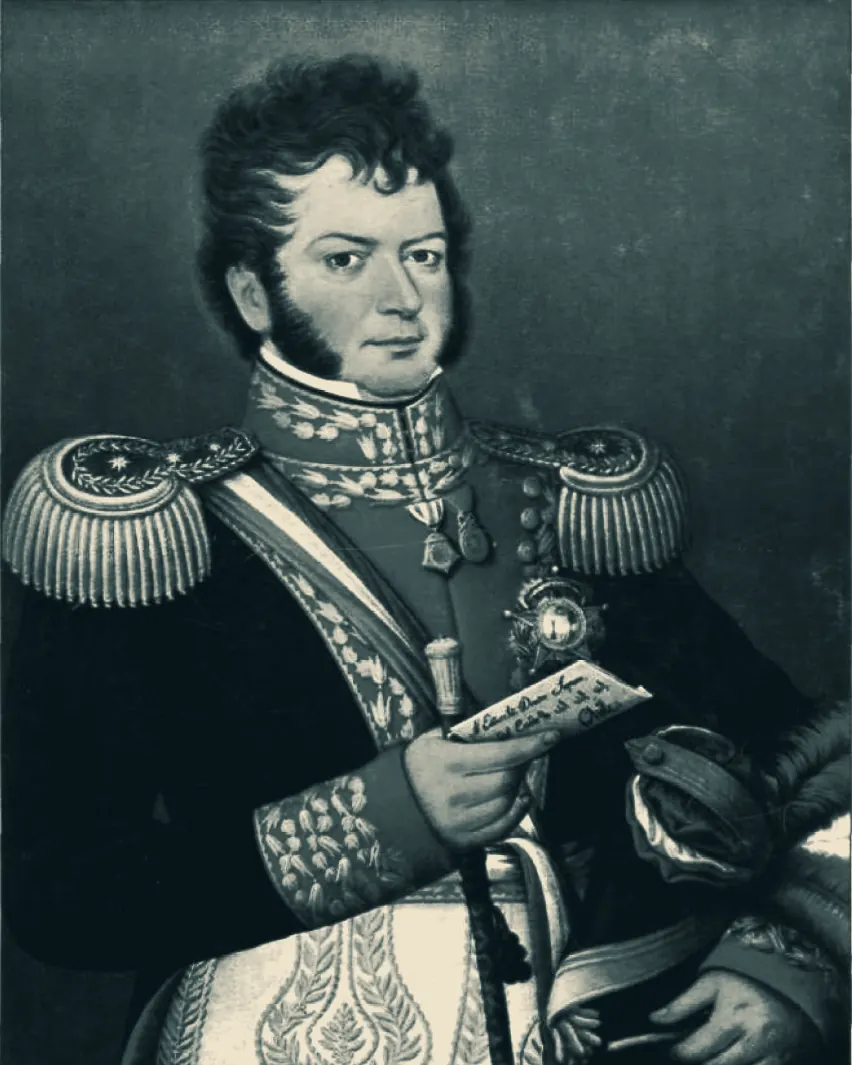
Bernardo O’Higgins Riquelme (1810)
An intimate portrait of the father of Chilean independence: a shy boy from the provinces.
O’Higgins, para celebrarte
a media luz hay que alumbrar la sala.
O’Higgins, to celebrate you
we must light the room in half-light.
The poem continues in the book. We quote only its opening: Neruda’s work is under copyright.
What it is about
Instead of the bronze hero, Neruda paints O’Higgins as a provincial child who does not yet know his name, a sad young man whose Santiago suit is too long for him. He recalls his exile, when Chile became a salon for the rich, and ends by claiming him as father of the people, «unchanging soldier».
How to read it
Notice the light at the start: to celebrate him you need half-light, as in the south in autumn. One of the most human portraits in Canto General.
O’Higgins was the illegitimate son of Ambrosio O’Higgins, who became viceroy of Peru, and grew up far from his father, with his mother’s surname: hence the «child who does not know his name».
Where to read it in full
It is online in full, in Spanish, in the anthology of the Pablo Neruda Portal of the University of Chile, which publishes his poems for study.
Read «Bernardo O’Higgins Riquelme (1810)» in Spanish (opens in a new tab)
It is in Canto General (1950). In English, look for an authorised translation —ideally a bilingual edition— in bookshops or at a public library. Guide to Canto General. All the poems of the book in the index.
Frequently asked questions
Which book is Neruda’s «Bernardo O’Higgins Riquelme (1810)» in?
In Canto General, in the section «The Liberators», published in 1950. In Spanish the poem is called «Bernardo O’Higgins Riquelme (1810)».
How does «Bernardo O’Higgins Riquelme (1810)» begin?
In Spanish: «O’Higgins, para celebrarte a media luz hay que alumbrar la sala.». Literally: «O’Higgins, to celebrate you we must light the room in half-light.».
Where can I read «Bernardo O’Higgins Riquelme (1810)» in full?
In Spanish, in the online anthology of the University of Chile’s Pablo Neruda Portal, which publishes it for study. In English, in an authorised translation of the book.