Poem by Pablo Neruda · Canto General, «Canto General of Chile» (1950)
Araucaria
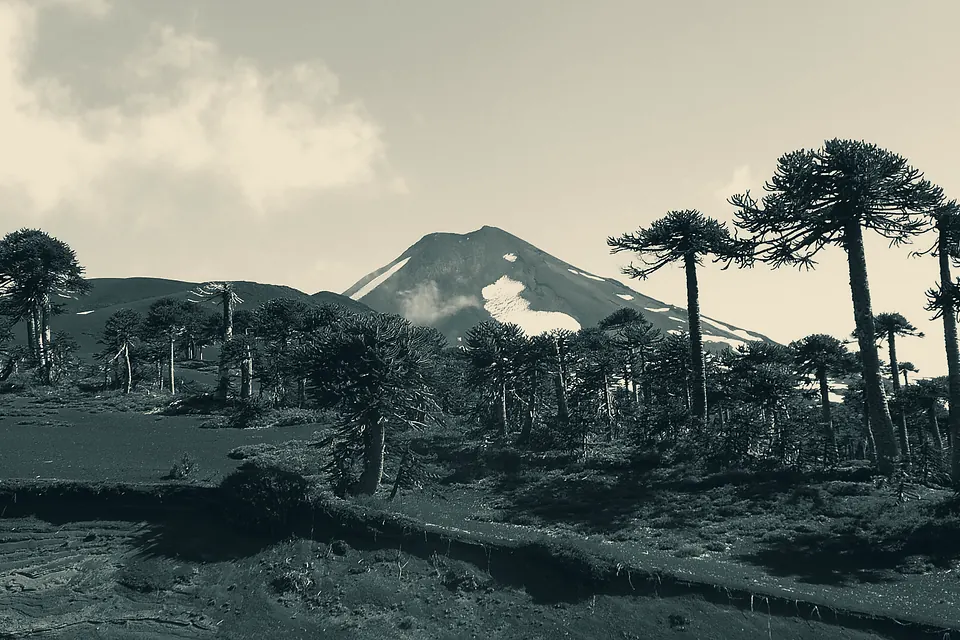
The araucaria as a fortress of winter: a statue of pure geology.
Todo el invierno, toda la batalla,
todos los nidos del mojado hierro,
All the winter, all the battle,
all the nests of wet iron,
The poem continues in the book. We quote only its opening: Neruda’s work is under copyright.
What it is about
Neruda describes the araucaria (monkey puzzle tree) as a wild city full of thorns, a tormented house built «with petals of pure geology». Winter kisses it, spring crashes against it and autumn waits in vain to give it golden leaves: the araucaria does not change.
How to read it
Read it with the «Ode to the Araucaria», written years later: here the tree is stone and resistance; there, food for the Mapuche people.
Where to read it in full
It is online in full, in Spanish, in the anthology of the Pablo Neruda Portal of the University of Chile, which publishes his poems for study.
It is in Canto General (1950). In English, look for an authorised translation —ideally a bilingual edition— in bookshops or at a public library. Guide to Canto General. All the poems of the book in the index.
Also in: poems about nature · Short poems
Frequently asked questions
Which book is Neruda’s «Araucaria» in?
In Canto General, in the section «Canto General of Chile», published in 1950. In Spanish the poem is called «Araucaria».
How does «Araucaria» begin?
In Spanish: «Todo el invierno, toda la batalla, todos los nidos del mojado hierro,». Literally: «All the winter, all the battle, all the nests of wet iron,».
Where can I read «Araucaria» in full?
In Spanish, in the online anthology of the University of Chile’s Pablo Neruda Portal, which publishes it for study. In English, in an authorised translation of the book.